
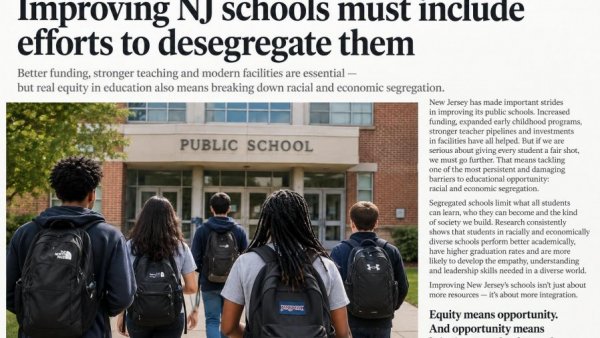
Understanding the Urgency of Desegregating NJ Schools
As discussions around improving New Jersey’s schools gain momentum, we must address a crucial issue: the pervasive racial and economic segregation impacting student outcomes. New Jersey’s education system, marked by significant disparities, notably affects the learning environment of Black and Latino students. These communities bear the brunt of historical injustices like redlining and systemic racism, which have concentrated poverty in schools, hindering not just their growth but that of all students involved.
The Detriment of Segregated Education
Research clearly illustrates how segregated schools foster inequality. Schools situated in affluent neighborhoods are typically better funded, equipped with advanced courses, and enjoy more stable staffing. In stark contrast, high-poverty schools, where many Black and Latino students are enrolled, allocate substantial resources to basic needs, leaving little for enrichment opportunities. This funding gap creates a cycle that continues to marginalize these students and restricts their potential.
Charter Schools: A Misguided Solution?
While charter schools were intended to offer alternatives to the traditional public school system, their establishment in New Jersey has inadvertently perpetuated the challenges. An alarming 85% of charter school students in New Jersey are either Black or Latino, often further segregating these groups into economically disadvantaged settings. This shift has significantly affected the public schools, reducing their resource allocation and compounding existing difficulties.
The Case for Integrated Schools
Integrating schools has been proven to enhance student achievement and broaden opportunities. Studies have demonstrated that schools which embrace racial and economic diversity foster not just academic success but also prepare students for thriving in a multiracial society. When combined with robust funding and quality early childhood education programs, these integrated settings pave the way for lasting benefits such as improved social mobility and better job prospects for graduates.
Charting a Path Forward
The current paradigm of segregated education must shift if we hope to create true equity in New Jersey's schools. Continuing attempts to improve educational outcomes without addressing the foundational issue of segregation is akin to applying a band-aid to a festering wound. We must advocate for policies that actively promote integration within our schools, ensuring they reflect the diverse society we live in. Only then can we offer all students the promise of a quality education, equipping them for success in an increasingly interconnected world.





Write A Comment