
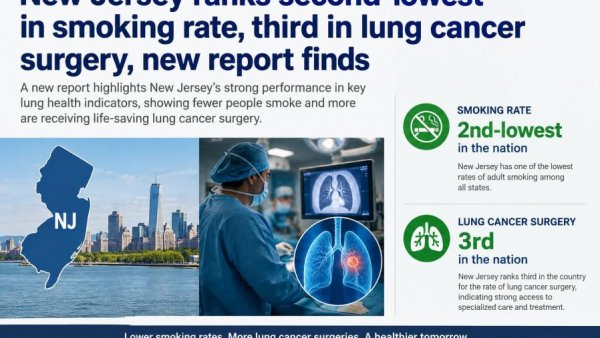
New Jersey's Low Smoking Rate: A Major Public Health Win
New Jersey stands out as a beacon of progress in tackling lung health issues, boasting the second-lowest smoking rate in the nation at just 7.1%. This statistic is especially significant against a national average of 10.4%. These numbers reflect not only a decreasing trend in smoking habits but also an increased awareness about the dangers of tobacco use, making the state a leader in public health initiatives.
Positive Lung Cancer Statistics: A Closer Look
In a recent report from the American Lung Association, New Jersey ranked third for surgical treatment of lung cancer patients. An impressive 26.7% of these patients opted for surgery as their first treatment, exceeding the national average of 21.4%. This is a crucial statistic; early surgical intervention can enhance survival rates significantly, highlighting the importance of timely diagnostics.
Challenges Ahead: Screening and Early Detection
While it's heartening to see these positive trends, the journey isn't complete. The New Jersey five-year lung cancer survival rate stands at 33.6%, slightly above the national average, yet significant room for improvement remains. Current early diagnosis rates indicate that only 29.1% of lung cancer diagnoses are made at an early stage, slightly below the national statistic of 29.3%.
Moreover, lung cancer screening in New Jersey is also trailing behind the national average. Just 23.5% of high-risk individuals in the state are getting screened, compared to 24.4% nationwide. This highlights a critical gap: increasing awareness and access to lung cancer screening can potentially save lives.
The Impact of Lifestyle and Environmental Factors
Another critical factor contributing to lung cancer is radon exposure, with New Jersey ranking eighth for radon levels in homes. Radon is the second leading cause of lung cancer; thus, being informed about testing and mitigation strategies is vital for residents across Sussex County and nearby areas like Andover Township and Sparta Township.
Advocacy and Future Directions
Looking forward, advocacy efforts are paramount. The American Lung Association urges Congress to enforce the Clinical Trial Modernization Act, aiming to better resolve barriers to clinical research participation. Additionally, New Jersey’s insurance landscape is supportive of comprehensive biomarker testing, unlike many states where such coverage isn't mandated. This engagement creates a significant opportunity for residents to access tailored treatment options.
In summary, while New Jersey is making strides in reducing smoking rates and improving treatment outcomes for lung cancer, persistent challenges in early detection and screening must be addressed. By fostering awareness and participation in these crucial aspects, we can work towards further decreasing lung cancer incidence and enhancing the survival rate in our communities.





Write A Comment