
New Jersey's Asian American Voters Take Center Stage
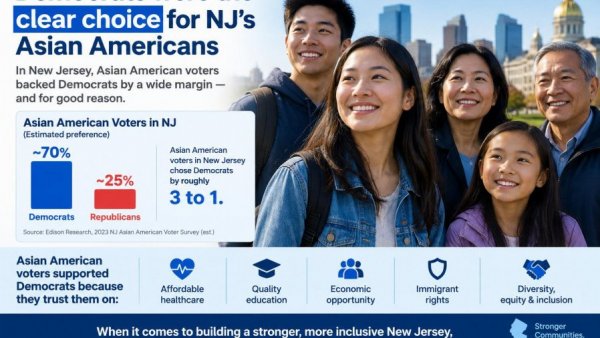
In the recent midterm elections, Asian American voters in New Jersey showcased their growing political power, aligning decisively with the Democratic Party. According to an extensive exit poll conducted by the Asian American Legal Defense and Education Fund (AALDEF), a staggering 87% of Asian Americans supported Democratic candidate Sen. Cory Booker—the most significant margin seen in recent New Jersey elections.
Democratic Gains and Shifting Allegiances
This shift in voting behavior marks a noteworthy change from the previous election cycle and indicates a deeper engagement with the political landscape. In 2024, only 52% of Asian Americans had backed Vice President Kamala Harris over Donald Trump, highlighting how quickly preferences can evolve in the political sphere.
As noted by former Democratic state representative Sadaf Jaffer, this election reflects a broader call for change among Democrats who seek progressive solutions to pressing social issues. Main concerns for Asian American voters were affordability and economic stability, suggesting that these issues resonate deeply within the community.
Challenges Faced at the Polls
Despite their significant turnout, many voters reported encountering barriers that hindered their electoral participation. Alarmingly, AALDEF noted that 53% of Asian Americans were asked for identification—something not required in New Jersey. Moreover, instances of language barriers, intimidation, and even the presence of law enforcement at polling sites raised alarms about voter accessibility.
The Road Ahead for Asian American Voters
Looking forward, the increasing voter turnout and preference for Democrats among Asian Americans reflects a potential trend in upcoming elections. The focus on integral issues such as healthcare and immigration could be decisive factors in shaping political campaigns, especially in diverse regions across Northern New Jersey, including towns like Sussex County and Sparta Township.
As the fastest-growing demographic in the state, Asian American voters will likely continue to influence political strategies and campaigns in the future. Their expanded representation in electoral politics underscores the necessity for parties to address their needs and concerns adequately.
The insights gathered from this election cycle serve as a compelling reminder that engagement and accessibility for all voters must remain a priority. As policymakers look toward the future, understanding and facilitating the voting needs of Asian Americans can play a critical role in shaping New Jersey's political landscape.





Write A Comment